In this article, we’re going to review the components of a social media ROI strategy and then review an example of how a company ties its social media efforts directly to its business growth strategy.
Measuring social media ROI is essential for companies because it provides valuable insights into the effectiveness of their marketing efforts and allows them to make data-driven decisions. By understanding the return on investment, companies can assess the impact of their social media campaigns on key business objectives such as revenue generation, lead generation, customer acquisition, and brand awareness. It helps marketers identify successful strategies and optimize their future campaigns, ensuring that resources are allocated efficiently.
However, many companies aren’t measuring their social media ROI. One reason is the complexity and perceived difficulty of tracking and attributing the impact of social media efforts to specific outcomes. It requires the use of analytics tools, setting up tracking mechanisms, and establishing clear attribution models.
Unfortunately, the most common metrics that get measured are vanity metrics like follower counts and likes, which will not provide a comprehensive picture of the actual business impact. These vanity metrics are, however, much easier to get.
Limited resources and time constraints also contribute to the difficulty of gaining true ROI measurement. However, by recognizing the significance of social media ROI measurement and investing in the necessary tools and resources, companies can unlock valuable insights and drive greater success in their social media marketing efforts.
Why Measuring Social Media ROI is Important for Companies
Aligning Efforts with Business Objectives
Measuring social media ROI allows companies to align their social media strategies with their overall business objectives. By quantifying the value generated from social media efforts, companies can ensure that their social media activities directly contribute to revenue generation, customer acquisition, brand awareness, or other desired outcomes. This alignment ensures that social media becomes a strategic tool for driving business success.
Optimizing Resource Allocation
Through measuring social media ROI, companies can identify which platforms, campaigns, or content types are most effective in driving results. This insight enables them to allocate their resources and budgets more efficiently, focusing on strategies that yield the highest returns while eliminating or refining underperforming efforts. By optimizing resource allocation, companies can maximize the impact of their social media investments.
Data-Driven Decision Making
Measuring social media ROI provides companies with valuable data that informs a decision-making process. It allows marketers to identify trends, patterns, and consumer behaviors, enabling them to refine their strategies, target the right audience, and create engaging content that resonates with their target market. By relying on data rather than assumptions, companies can make informed decisions that drive better outcomes and deliver a higher ROI.
How to Measure Social Media ROI Effectively
To effectively optimize social media ROI, it is crucial to first understand what it entails. Social media ROI is the measurement of the value generated from social media marketing efforts in relation to focusing on tangible outcomes that align with business objectives. By gaining a clear understanding of social media ROI, marketing professionals can set realistic goals and develop strategies to achieve them.
Key performance indicators (KPIs) play a vital role in measuring social media ROI. They provide actionable insights into the success of marketing campaigns and allow marketers to track progress over time.
Some of the essential KPIs include click-through rates (CTR), conversion rates, engagement rates, reach, cost per acquisition (CPA), and lifetime value (LTV). By carefully analyzing these metrics, marketing professionals can identify areas for improvement and allocate resources effectively.
Measuring Click-through Rates (CTR)
 Click-through rate (CTR) is an important metric that measures the percentage of people who click on a link or call-to-action in a social media post or ad.
A high CTR indicates that the content or ad is compelling and resonates with the audience.
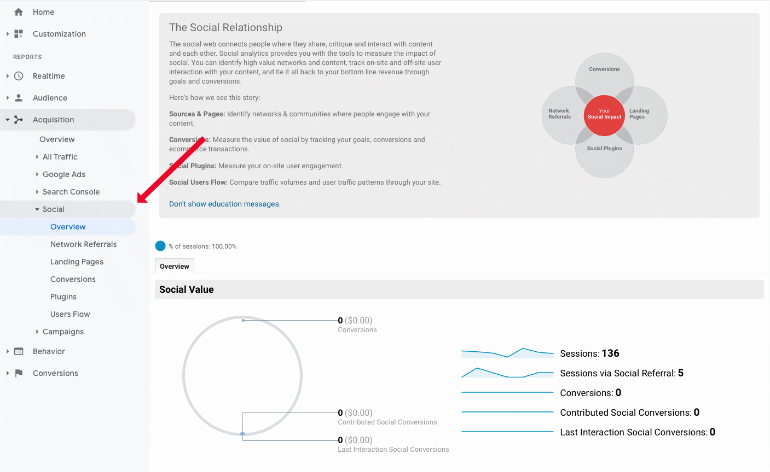
You can find the number of visitors to your website that have come from your social media accounts within your Google Analytics account.
Once logged into Google Analytics, navigate to Acquisition > Social > Overview. From there, you can drill down into individual social media platforms.
To improve CTR, marketers can experiment with different headlines, visuals, and calls-to-action and track the performance of various elements.
Conversion Rates and ROI
Conversion rates determine the effectiveness of social media campaigns in driving desired actions, such as purchases, sign-ups, or downloads. Calculating conversion rates involves tracking the number of conversions generated from social media channels and dividing it by the total number of visitors to your website from your social media account.
By optimizing landing pages, streamlining the conversion process, and running targeted campaigns, marketers can boost conversion rates and, subsequently, ROI.
Engagement Rates and Building Relationships
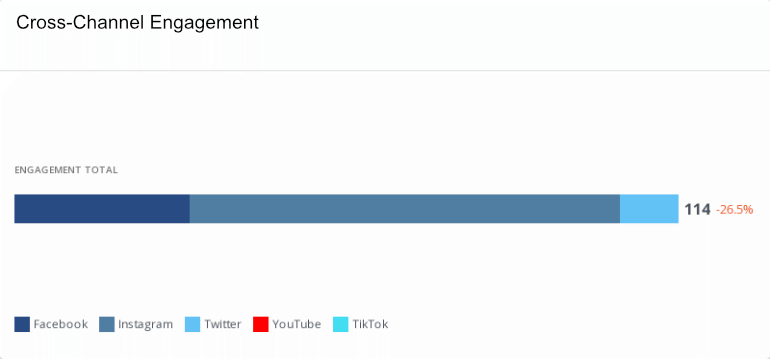 Engagement rates measure the level of interaction and involvement that social media posts receive.
Higher engagement rates indicate that the content resonates with the audience, leading to increased brand awareness and potential conversions.
In the context of social media, engagement refers to the level of interaction, involvement, and responsiveness that users have with a brand's social media content.
It encompasses various actions taken by users, such as likes, comments, shares, mentions, direct messages, clicks, and reactions. Marketers can improve engagement rates by posting relevant and valuable content, encouraging audience participation through questions or contests, and responding promptly to comments and messages.
Reach and Amplification
Reach refers to the total number of unique individuals who have seen a social media post or ad. Increasing reach allows marketers to expand their brand's visibility and potentially reach new audiences.
To maximize reach, marketers can utilize paid social media advertising to target specific demographics, collaborate with influencers or brand advocates, and optimize content for shareability.
Cost per Acquisition (CPA) and Lifetime Value (LTV)
Cost per acquisition (CPA) is the average cost incurred to acquire a new customer or lead through social media marketing efforts. By tracking CPA, marketers can evaluate the cost-effectiveness of their campaigns and make adjustments to improve efficiency. Lifetime value (LTV) measures the long-term value generated from a customer relationship.
By increasing LTV through customer retention and upselling strategies, marketers can enhance the overall ROI of social media marketing efforts.
Set Clear Goals and Objectives
To measure social media ROI effectively, companies must establish clear goals and objectives that align with their overall business objectives. Whether the focus is on revenue generation, lead acquisition, customer retention, or brand awareness, having specific and measurable goals is crucial. Clear goals provide a direction for measuring and optimizing social media ROI.
Define Key Performance Indicators (KPIs)
Identify the key performance indicators (KPIs) that directly correlate with the established goals. These could include metrics such as click-through rates (CTR), conversion rates, engagement rates, reach, cost per acquisition (CPA), or customer lifetime value (LTV). Selecting the right KPIs ensures that the measurement process is focused and provides meaningful insights into the success of social media efforts.
Implement Tracking and Attribution Methods
To measure social media ROI accurately, companies need to implement tracking mechanisms and attribution models. Utilize analytics tools and social media platform's native analytics to track the performance of campaigns and content. Set up conversion tracking, UTM parameters, or pixel tracking to attribute conversions or actions to specific social media touchpoints. By accurately tracking and attributing results, companies gain insights into the impact of their social media efforts.
Calculate ROI and Cost Analysis
To calculate social media ROI, companies should compare the value generated from social media efforts with the costs invested. Consider the revenue generated, cost savings, or other quantifiable outcomes attributable to social media. Calculate the return on investment by subtracting the costs from the value generated and divide it by the cost to get the ROI percentage. Regularly analyze and evaluate the ROI to identify areas for improvement and make data-driven decisions.
Continuously Monitor and Refine Strategies
Measuring social media ROI is an ongoing process that requires continuous monitoring and refinement. Regularly analyze the performance of campaigns, content, and platforms. Identify trends, insights, and opportunities for improvement. Adjust strategies based on data-driven insights to optimize ROI over time. By continuously monitoring and refining social media strategies, companies can adapt to changing consumer behaviors and market dynamics, maximizing their social media ROI.
Example: Aligning Social Media Efforts with Business Objectives
Company: XYZ Fitness Apparel
Business Objective: Increase Online Sales by 20% in the Next Quarter
To align social media efforts with business objectives, XYZ Fitness Apparel, a leading activewear brand, implements a strategic approach that focuses on driving online sales. Here's how they do it:
Set Clear Goals and Objectives:
XYZ Fitness Apparel establishes a clear and specific goal: to increase online sales by 20% in the next quarter. This goal provides a tangible target and direction for their social media efforts.
Define Key Performance Indicators (KPIs):
To measure the success of their social media campaigns in achieving the sales objective, XYZ Fitness Apparel identifies relevant KPIs. These may include conversion rate, click-through rate (CTR), average order value, and customer acquisition cost (CAC). These metrics provide measurable benchmarks for tracking progress and evaluating the effectiveness of their social media initiatives.
Audience Analysis and Targeting:
XYZ Fitness Apparel conducts thorough audience analysis to understand its target market and their preferences. They identify their ideal customer persona, including demographic information, interests, and online behaviors. This analysis helps them tailor their social media content and targeting strategies to reach the right audience effectively.
Content Strategy and Messaging:
Based on the audience analysis, XYZ Fitness Apparel develops a content strategy that aligns with its business objective of increasing online sales. They create engaging and informative content that showcases their latest product releases, highlights the benefits of their activewear, and offers exclusive promotions or discounts. The content focuses on driving conversions and compelling their audience to make a purchase.
Call-to-Action (CTA) and Sales Funnel Optimization:
XYZ Fitness Apparel optimizes its social media posts and advertisements by incorporating clear and compelling calls-to-action. They direct their audience to their e-commerce website or landing pages that feature showcased products or exclusive offers. By optimizing the sales funnel and streamlining the conversion process, they ensure a smooth customer journey from social media engagement to completing a purchase.
Tracking and Analytics:
To measure the impact of their social media efforts, XYZ Fitness Apparel utilizes tracking mechanisms and analytics tools. They implement pixel tracking, UTM parameters, or conversion tracking to attribute online sales to specific social media campaigns or channels. By monitoring the performance data, they gain valuable insights into the effectiveness of their social media initiatives and identify areas for improvement.
Continuous Optimization and Adaptation:
XYZ Fitness Apparel continuously evaluates the performance of its social media campaigns and makes data-driven optimizations. They analyze the KPIs, conversion rates, and customer feedback to refine their content, targeting strategies, and promotional offers. They adapt their social media strategies based on trends, customer preferences, and changing market dynamics to maximize their online sales and achieve their business objectives.
By aligning its social media efforts with the objective of increasing online sales, XYZ Fitness Apparel creates a cohesive and strategic approach. This approach ensures that their social media initiatives are focused, measurable, and directly contribute to achieving their desired business outcome.
Conclusion
Measuring and maximizing social media ROI is essential for companies aiming to unlock the true potential of their social media marketing efforts. By aligning social media strategies with business objectives, optimizing resource allocation, and making data-driven decisions, companies can drive success and achieve meaningful results. Implementing the steps outlined in this article will empower companies to effectively measure social media ROI, refine their strategies, engage their audience, and generate significant returns on their social media investments. By leveraging the power of social media and maximizing ROI, companies can thrive in the digital landscape and stay ahead of the competition. To discuss social media ROI further, feel free to contact us.