The digital marketing landscape can often appear complex, particularly when you’re addressing top-of-the-funnel (TOFU) prospects. For small to mid-sized B2B marketers, it’s essential to not only choose the right digital marketing channels but also to leverage them effectively to engage these initial-stage prospects. This article aims to provide you with valuable insights into navigating the digital channels for successful TOFU marketing.
TOFU Concept in B2B Marketing
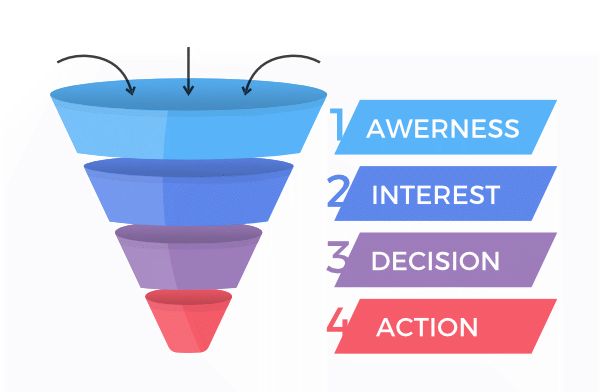 In B2B sales, the “top of the funnel” (TOFU) refers to the initial stages of the buyer’s journey. It’s the point where potential customers first become aware of a problem or opportunity within their business and begin searching for possible solutions.
At this stage, they may not even be conscious of your company or its offerings. They are simply gathering information, learning more about their issue, and beginning to understand the landscape of potential solutions.
The TOFU stage is characterized by a broad audience of prospects exploring and researching. These prospects are not necessarily ready to make a purchase decision or even engage with a sales representative. Instead, they are primarily focused on educating themselves about their problem and the types of solutions that exist.
It is during this stage of the buyer's journey toward a solution that content like blog posts, educational videos, infographics, and white papers can help to position your company as a thought leader and trusted resource. By delivering valuable, problem-solving information at this stage, you can build awareness and credibility, making it more likely that your company will be at the top of their list when the prospect is ready to consider specific solutions or providers.
The key to success in the TOFU stage is to be helpful and informative rather than promotional. The goal is to create a positive first impression, build trust, and foster a relationship that can be nurtured as the prospect moves further down the sales funnel. In B2B sales, where purchase decisions often involve significant investment and risk, establishing this trust and relationship early on can be a critical factor in ultimately winning the business.
Key Digital Marketing Channels for TOFU
We’ll explore five key digital marketing channels crucial for TOFU prospects: Search Engine Optimization (SEO), Content Marketing, Social Media Marketing, Pay-Per-Click (PPC) Advertising, and Email Marketing. For each, we’ll explain why they’re vital in B2B marketing and provide detailed insights into how you can leverage them effectively.
Search Engine Optimization (SEO)
Organic Optimization
Yes, SEO is still important. SEO is a cornerstone of the digital marketing landscape. It enhances your website’s visibility on search engine results pages (SERPs), significantly increasing the likelihood of discovery by TOFU prospects. SEO is especially vital for B2B marketing because it drives organic traffic to your website, heightens brand visibility, and sets the stage for establishing your brand as an authority.
Using SEO effectively for B2B TOFU marketing begins with optimizing your website with relevant keywords.
In the top-of-the-funnel, (TOFU) stage, B2B companies need to focus on keywords that prospective clients may use when they are just beginning to recognize a problem or a need. At this stage, prospects are often seeking educational content to help them better understand their situation, so it’s essential that the keywords reflect this intent.
Broadly speaking, TOFU keywords will often be related to the challenges and opportunities within the prospect’s industry or their business role.
For example, a company selling inventory management software might target keywords such as “inventory management challenges,” “reducing overstock,” or “optimizing warehouse space.” These keywords relate to common pain points that their solution addresses. The prospects searching these terms are likely in the early stages of considering solutions like the company’s software.
In addition to problem-oriented keywords, B2B companies may also focus on informational keywords related to their product or service. For instance, a cloud services provider might target keywords like “benefits of cloud computing,” “cloud computing explained,” or “why move to the cloud.” These keywords are likely to be used by prospects who are starting to explore the potential value of cloud services but are still in the learning phase.
Remember, TOFU SEO optimization aims not to sell immediately but to provide valuable content that positions your company as a trustworthy resource.
Backlinking
Backlinking is an important component of SEO. A robust backlink profile can significantly enhance your site’s authority.
Backlinks, also known as inbound or incoming links, are hyperlinks from one website that lead to another website. In simpler terms, when Website A links to Website B, B receives a backlink from A. These backlinks act as an endorsement or vote of confidence from one site to another.
Backlinks are paramount to Search Engine Optimization (SEO) for several reasons. Firstly, they indicate to search engines, like Google, that your content is valuable and trustworthy. If numerous high-quality websites are linking to your content, it is seen as a recommendation of your content’s credibility and relevance. This can significantly boost your site’s position on search engine results pages (SERPs).
Secondly, backlinks can increase the discoverability of your site. They provide pathways for users (and search engine crawlers) to traverse the internet and discover new content.
To illustrate how a backlink strategy can be implemented successfully in a B2B context, let’s consider an example from the manufacturing industry. Suppose you’re a company that specializes in eco-friendly packaging solutions. You could identify a popular, well-regarded blog focusing on business operations’ sustainability. You then reach out to the blog owner with a proposal for a guest post on a topic like “Reducing Environmental Impact with Eco-Friendly Packaging.”
In your guest post, you offer valuable insights, statistics, and actionable steps, delivering valuable content to the blog’s readers. Naturally woven into the content, you include a link back to an in-depth article or case study on your website, perhaps one that outlines the positive environmental impact a business experienced after switching to your eco-friendly packaging solutions.
This strategy benefits all parties involved: the blog owner receives high-quality, relevant content at no cost; their readers gain valuable information and new perspectives; and you earn a backlink from a reputable website. This not only supports your SEO efforts but also brings relevant traffic back to your website.
The essence of a successful backlink strategy lies in the quality of the sites linking to you and the quality of the content being linked. The more authoritative and relevant the linking site is, and the higher your content quality, the more valuable the backlink will be for your SEO.
Content Marketing
Content marketing is a formidable tool. By providing high-quality, relevant content, you showcase your expertise, build brand authority, foster trust, and nurture long-term relationships with your prospects.
For B2B TOFU marketing, your content should cater to your prospects’ information-seeking behavior. They’re looking for insights into their problem and possible solutions, not a sales pitch. Blogs, whitepapers, e-books, reports, and infographics make excellent content types at this stage. They help answer common questions, clarify concepts, and offer useful insights.
For top-of-the-funnel (TOFU) prospects, your content should primarily be educational. The goal is to build brand awareness, establish credibility, and nurture a relationship that can evolve as the prospect moves through the sales funnel.
Blogs, white papers, and eBooks for TOFU prospects should focus on broader topics related to your industry rather than specific products or services. The content should help your prospects better understand their needs or challenges and should position your company as a knowledgeable authority within the industry. Topics could range from industry trends and best practices to how-to guides and case studies.
For example, imagine a B2B company that provides sustainable materials for the construction industry. To target TOFU prospects, they might develop a white paper titled “The Future of Construction: Embracing Sustainability.” This white paper would delve into the environmental challenges currently facing the construction industry, discuss the benefits of sustainable materials, and explore the future trends in sustainable construction.
The company would then promote this white paper across various channels such as its website, email newsletters, social media platforms, and even through targeted paid advertising. The aim is to attract construction companies that are starting to realize the importance of sustainability and are seeking more information.
By providing a well-researched and insightful white paper, the B2B company not only positions itself as a thought leader in sustainable construction but it also captures the contact information of potential leads who download the white paper, providing opportunities for further nurturing and engagement.
Social Media Marketing
Social media platforms offer a treasure trove of opportunities for B2B marketers. LinkedIn, Twitter, and Facebook, among others, provide a platform to connect with TOFU prospects, initiate conversations, and build relationships.
To use social media effectively for TOFU marketing, start by identifying the platforms your prospects frequent. Each platform has its unique features and audience types. For instance, LinkedIn is a professional networking site, making it ideal for sharing industry insights, whereas Twitter’s real-time conversation style lends itself well to timely updates and quick interactions.
LinkedIn Organic
LinkedIn stands as an indispensable platform for B2B marketing, thanks to its unique business-oriented nature and professional demographic. LinkedIn offers multiple benefits. It serves as an effective stage to demonstrate thought leadership and industry expertise by posting and sharing valuable content.
Additionally, it’s an excellent networking platform that enables companies to build relationships and engage in insightful conversations with industry colleagues, influencers, and potential customers.
Furthermore, LinkedIn’s advanced targeting features allow companies to precisely reach the audience segments most relevant to their business.
For example, let’s consider a company called EcoEnergy Solutions, which provides renewable energy solutions for businesses. They could leverage LinkedIn in a very effective way.
EcoEnergy Solutions would establish a regular posting schedule to kick things off, sharing content related to renewable energy trends, challenges, and innovative solutions. They would also share case studies demonstrating how their solutions have positively impacted their clients’ operations, reducing costs and carbon footprints.
Identifying a rising interest among businesses in reducing energy costs and embracing sustainability, they could create a detailed eBook titled “Harnessing Renewable Energy: A Guide to Sustainable Business Practices.” EcoEnergy Solutions would then promote this eBook on LinkedIn, specifically targeting companies in industries known for heavy energy consumption.
Their LinkedIn posts promoting the eBook would stimulate interest, drive downloads, and trigger valuable discussion in the comments sections. EcoEnergy Solutions’ team would actively join these conversations, offering their expertise and advice, thus demonstrating their commitment to helping businesses navigate their energy challenges.
This approach could significantly enhance their brand visibility, elevate their position as thought leaders in renewable energy, and generate numerous leads from businesses interested in EcoEnergy Solutions’ offerings.
LinkedIn Paid
LinkedIn also has a paid advertising feature that offers various powerful tools designed to help businesses reach a highly targeted, professional audience. These tools include Sponsored Content, Sponsored InMail, Text Ads, and Dynamic Ads, each offering unique advantages depending on a company’s marketing objectives.
Sponsored Content allows businesses to promote posts to a targeted audience beyond their current LinkedIn followers. This can significantly extend the reach of their content and help attract new followers and generate leads.
Sponsored InMail allows businesses to send personalized, direct messages to targeted individuals, ensuring their message is seen by the right people at the right time.
Text Ads are simple but effective pay-per-click (PPC) or cost-per-impression (CPM) ads, while Dynamic Ads are personalized based on the user’s LinkedIn profile data, making them more relevant and engaging.
One of the biggest benefits of LinkedIn’s paid advertising is its powerful targeting capabilities. Businesses can target their ads based on numerous criteria, such as location, company size, industry, job title, skills, and more. This ensures that their ads are seen by the individuals who are most likely to be interested in their products or services.
In addition, LinkedIn’s advertising platform provides comprehensive analytics that allows businesses to monitor their ads’ performance in real time. They can see how many impressions their ads are getting, how many clicks they’re driving, the demographic data of the individuals engaging with their ads, and more. This valuable data can help businesses adjust their strategies to improve their ad performance.
While organic posting on LinkedIn is a valuable strategy for building long-term relationships and establishing thought leadership, paid advertising complements this by providing immediate, targeted reach and visibility.
This data is critical for refining your TOFU strategies, enhancing your content, and driving more valuable leads into your funnel.
In short, LinkedIn’s paid advertising provides a powerful toolset for reaching and engaging your desired audience, serving them high-value content, and drawing them into your sales funnel. It’s an excellent platform for B2B companies looking to expand their reach, engage their audience, and boost their TOFU marketing efforts.
PPC Advertising
PPC Advertising offers direct visibility to your TOFU prospects. It’s an invaluable tool in the B2B marketing space due to its precise targeting abilities. It allows you to reach your audience based on specific keywords, demographics, locations, and more.
One of the most compelling advantages of PPC advertising is its ability to target specific demographics precisely.
PPC platforms, like Google Ads and Bing Ads, allow you to set specific campaign parameters. You can target based on location, language, device, and time of day. More importantly, you can also target based on keywords.
By identifying and bidding on the keywords relevant to your business and your target audience, you ensure your ads appear to those likely to be interested in your products or services.
Additionally, PPC advertising platforms often provide options for retargeting or remarketing. These are strategies designed to show your ads to people who have previously visited your website or used your app. It’s a powerful way to re-engage those who have already expressed interest in your products or services, making them highly likely to convert.
Moreover, PPC ads are nearly immediate. Unlike SEO strategies that require time to generate results, they can be launched quickly. This makes PPC a good option for reaching your target audience quickly, like during a product launch or a special promotion.
PPC also provides valuable data and insights. Ad platforms offer robust analytics that shows you exactly how your ads are performing. You can see how many people see your ads, how many click on them, and how many take a desired action on your website. This data allows you to measure the effectiveness of your ad campaigns and adjust them for better results.
For successful B2B TOFU marketing via PPC, start with keyword research. Identify keywords that your TOFU prospects will likely use while searching for solutions. Use these keywords to create your ad campaigns. The ad copy should be compelling and clearly articulate your value proposition.
But it’s not just about setting up the campaign; monitoring is equally important. Regularly review your campaigns’ performance. Adjust bids, experiment with different keywords, and tweak the ad copy based on results to optimize your campaigns continually.
Email Marketing
Email marketing, one of the oldest forms of digital marketing, remains a critical tool in B2B TOFU marketing. It provides a direct communication line to your prospects and offers ample opportunities for personalization and segmentation.
Successfully attracting top-of-the-funnel prospects via email marketing begins with the crucial step of building a robust email list. To do this, you can leverage high-value, free content, such as eBooks, whitepapers, or webinars, on your website.
You offer these resources in exchange for your visitor’s contact information. This type of content is particularly attractive to top-of-the-funnel prospects who are typically in the information-seeking phase related to your industry or product.
Another effective strategy for building an email list is using website pop-ups or dedicated landing pages with signup forms. These encourage site visitors to subscribe to your newsletters or updates.
In all these tactics, it’s essential to clearly communicate the value prospects will receive in return for providing their email addresses. The promise of receiving informative, relevant, and valuable content in their inbox can incentivize visitors to sign up.
After you’ve started to compile your email addresses, the next step involves segmenting your list. Even though you may not have extensive information about your top-of-the-funnel prospects at this point, you can still use the details you’ve gathered.
For instance, if your free resources cover different topics, you can segment your list based on which resources prospects have downloaded. This provides an initial understanding of their interests and helps tailor your future content accordingly.
Once you’ve segmented your list, you can create personalized email campaigns for each group, delivering content that addresses their specific needs and interests. Personalized content is far more likely to engage your audience and move them further down the funnel.
Remember that delivering value is the key to successful email marketing for top-of-the-funnel prospects. Your emails should primarily be educational and informative, helping your prospects solve a problem or answer a question related to your industry.
Avoid hard selling at this stage. Instead, aim to establish your brand as a valuable resource and a trusted authority in your field.
Using email marketing automation tools, you can schedule a series of emails that nurture these prospects over time, gradually introducing them to your offerings as they move down the funnel. This drip marketing strategy is a powerful way to engage, educate, and nurture prospects, guiding them on their buyer’s journey.
Finally, make sure to monitor and adjust your strategy based on your email marketing analytics. Keep track of open rates, click-through rates, conversion rates, and unsubscribe rates. These metrics will provide insights into what’s working and what’s not, allowing you to adjust your strategy for better results.
Conclusion
Choosing the right digital marketing channels for your B2B TOFU prospects involves thoroughly understanding your target audience, their preferences, and their behavior. Consider where they seek information, what types of content they prefer, and how they engage with that content.
It’s also crucial to consistently monitor and evaluate the performance of your chosen channels. Use analytics tools to track engagement, conversions, and ROI. These insights can help you refine your strategy, allowing you to optimize your efforts for maximum effectiveness.
Successfully guiding TOFU prospects through the buyer’s journey requires careful selection and strategic use of digital marketing channels. By understanding each channel’s unique strengths and how to leverage them for B2B TOFU marketing, you can build a robust strategy that engages your prospects and positions your brand as an ideal solution provider.
We’re here to help you make the most of your digital marketing endeavors, especially for engaging your top-of-the-funnel prospects. If you have any questions feel free to schedule a call or drop us an email.