Why A Content Refresh Matters
Content is never a "set it and forget it" endeavor. Content is an ever-evolving asset, and to maintain or improve its value, you must keep it relevant, accurate, and aligned with your audience’s needs.
Refreshing your website’s content will have two benefits. First, as mentioned, it will keep the latest information in front of your visitors. Second, refreshing a website’s content may assist, indirectly, with your company’s ranking on the search engine’s results page.
The Concept of Content Freshness and SEO
There is a myth in the digital marketing industry that “refreshing” content will improve rankings. Because of this myth, some SEO companies will do one or a couple of “SEO Hacks” on your website.
One of these hacks, the most often used hack I’ve heard of, is where the company you hire for your SEO work will go through your website and update the publish date on your website page. In this scenario, no new information is added to a website page; it’s just a new date on the page file.
This will not help either your website visitors or your SEO ranking! It is a scam.
The second hack that I’ve become aware of is where a company claiming to be an SEO agency will rewrite the content on a website page using the same words that are already on the page. Again, no new information is added or any old information removed. Think of this as re-arranging the furniture in your living room. It’s all the same stuff, just put in a different place.
This will not help your website visitors, which should be your primary focus with any content you put on your website.
So, where did this myth get started?
In November 2011, Google updated its algorithm to evaluate the “freshness” of content. This part of the myth is true: an algorithm update looked at when a website's content was published. However, the part that most people are missing is that this algorithm update looks at content freshness only when it’s relevant to certain types of search queries.
There are only three types of search queries that will utilize this freshness update:
- Recent events: Things like news information.
- Regularly recurring events: Things like sports scores.
- Frequent updates: Things like reviews or top 10 lists.
So, updating the content on typical website pages won’t help your search ranking directly. However, it’s vital that we don’t end this conversation here!
How Does Content Freshness Help
Everything we do with a website must be done with the website’s visitors in mind, or else there’s no reason for them to come to your website. With this in mind, let’s explore why you should keep your website content up-to-date.
Let’s face it: updating content properly takes time, and none of us have an excess of time, so this better be worth it.
You should continuously refresh your website’s content because it improves the user’s experience (UX). It’s been well documented that a positive website experience by your users will lead to improved brand perception, increased brand loyalty, and improved conversions.
Earlier, I said refreshing your website’s content won’t directly impact your search rankings. There are ways that refreshing your content will indirectly help you with your search engine rankings.
One of the most significant ways that content freshness will impact your search rankings is page engagement. Fresh content will improve your website's engagement with the people visiting your site simply because it contains the latest information. That increase in engagement will help improve your rankings because Google considers engagement a positive ranking factor.
As you update or refresh the content on your website, don't forget what Google has to say about content, within their Quality Rater Guidelines. Google developed the acronym EEAT to highlight what they consider quality content. This EEAT acronym stands for:
- E: Experience. This means demonstrating your experience on the topic that you're writing about.
- E: Expertise. Show your level of expertise on your subject matter.
- A: Authoritativeness. This is when others recognize you as an expert by citing or linking to your content.
- T: Trust. Your content builds trust when it demonstrates accuracy and legitimacy for your business.
What Is Outdated Content
The reality is that content doesn’t just stay valuable indefinitely; its relevance often will degrade over time; instead of looking at a published date on your website’s page, it's better to read the content of a page and determine if that page is still relevant to your company or industry.
Even the About Us page could be updated periodically. If your company has gone through a growth spurt, there are probably new people at your company, you may be covering a more extensive geography, or you may have just released an entirely new product line. These topics could and should be covered in your website’s content.
Annual Audit
Though there is no definitive answer to the question of how old is too old for your content, we do recommend auditing your website’s content annually, looking for information that may no longer be relevant or is out of date.
If you’re undecided whether or not the content on a page is still relevant, open up your Google Anallytics and take a look at the webpage's performance over time. Is the time on page metric staying about the same over the past 12 - 24 months, or is it going down?
If it’s going down, meaning people are on that page for less time, indicating less engagement, then it is quite possible that it could be time for a refresh of the content on that page if what the page is talking about is still relevant.
How To Audit Content
 The first step that you’ll take to do your content audit is to compile a list of pages that you want to review. The best place to start will be with the most important pages of your site. Pages like landing pages, blog posts, white papers, and your Contact Us page. These pages should represent the highest value to your marketing process.
Once you’ve assembled all the pages you want to review, it’s time to determine the current performance for each page. This will give you a baseline for the next time you audit the page and help you determine the page's current performance.
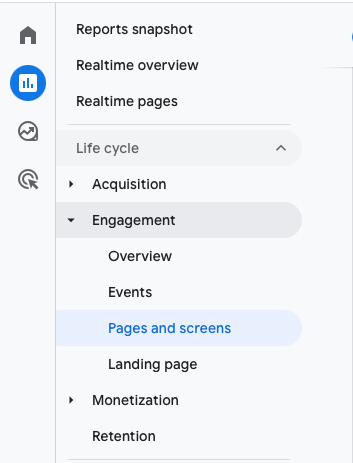
The most important metric you’ll want to collect is the time on page metric. To get this information, go to your Google Analytics account and navigate to Reports>> Engagement >> Pages and Screens. In this report, you will find a table showing the average amount of time visitors to your website spend on individual pages.
With this metric, it's important to know that for a user to be registered in Google Analytics 4 (the current Google Analytics platform) as engaged with a website page, they need to be on a page for around 10 seconds.
Added Value of a Content Refresh
A Refresh Could Be An Opportunity
As long as you’re going through the work of refreshing the content on a website page or pages, now is an excellent time to add a little bit of keyword research to the effort. Depending on how old the original content may be, there’s a good chance that the keywords that you initially used for that page are no longer relevant.
Take a bit of time to re-evaluate the keywords that make the most sense for the page you’re updating, and use these new, more current keywords in the latest content you create for your website page.
This is also a great time to build more or new backlinks to your updated page.
As you change the content, can you think of any websites that would be interested in linking to this new content that possibly weren’t interested in the original content?
Again, a content refresh won’t, all by itself, impact your search rankings, but these are a few areas in which your content refresh will cause other opportunities that could positively impact your SEO.
Structural Improvements: Enhancing Readability, Scannability, and User Engagement
Another opportunity with your content refresh is to improve the content structure on the page. Make the information more accessible and engaging by breaking down long paragraphs, organizing information logically, and using elements that make it easy to scan:
- Use subheaders to guide readers through each section, especially for articles over 1,000 words.
- Bullet points and numbered lists are helpful for breaking down complex information or steps, increasing readability.
- Shorten paragraphs to improve flow, and keep sentences concise to reduce cognitive load.
- Callouts and quotes can add value by highlighting key insights or expert opinions that draw reader attention.
- Enhanced structure not only benefits user engagement but also aids SEO, as search engines prefer content that’s easy to understand and navigate. Improved readability can lead to longer on-page times and lower bounce rates, signaling quality to search engines.
Incorporating New Media for Enriched User Experience
Today’s readers expect visually engaging content. Incorporating multimedia elements like images, infographics, and videos can enhance comprehension and make the page more appealing:
Infographics are great for visualizing complex data or processes and can increase shares and backlinks.
Videos add depth, whether they’re explainer videos, interviews, or brief tutorials that reinforce the written content.
Images add breaks in the text, providing a visual reprieve for readers and making the content more approachable. Use captions to describe and optimize these images for SEO.
If the original content lacks visuals, consider adding diagrams, step-by-step images, or even short, embedded animations or gifs. This addition not only enriches the user experience but also can improve SEO metrics like time-on-page and user retention.
Conclusion
Refreshing content isn’t just a quick fix—it’s a strategic move that can breathe new life into underperforming pages, enhance user experience, and boost SEO.
By focusing on meaningful updates—such as adding fresh data, refining keywords, improving readability, and incorporating multimedia—you can create content that aligns with current user intent and maintains relevance in a constantly shifting digital landscape.
Unlike simple rewording, a full content refresh has the potential to increase organic traffic, improve engagement metrics, and ultimately deliver greater value to both users and search engines.
Incorporating content refreshes into your regular content strategy ensures that your site remains authoritative and valuable to your audience over time. To get started, identify pages that could benefit from an update, prioritize those with the highest potential for impact, and apply the best practices outlined here.