The structure of your website plays a crucial role in your online visibility and user experience. However, the intricacies of how website architecture impacts search engine optimization (SEO) are often overlooked.
This article delves into a key aspect of SEO strategy: why search engines prefer a hierarchical website structure over flat structures. Understanding this can be a game-changer for marketing professionals, transforming your site from just another online presence to a potent tool in your marketing arsenal.
Here, we'll explore the differences between flat and hierarchical site structures, how they affect your site’s relationship with search engines, and why embracing a hierarchical approach can lead to improved SEO results.
Whether you’re looking to overhaul your site or just fine-tune it, this insight is crucial for anyone looking to boost their website's performance in Google's search rankings.
Understanding Site Structures
Flat Structure
 Take, for instance, an online clothing store. In a flat structure, dresses, shoes, accessories, and contact information might all compete for attention on the main page.
In a hierarchical structure, these would be neatly categorized, making the site more navigable and logical.
With a flat website structure, while each page is easily accessible from the homepage, this can lead to a cluttered and overwhelming user experience. Moreover, a flat website structure dilutes the importance of each page in the eyes of search engines.
Flat website structures often lead to navigation challenges and difficulty in establishing a clear hierarchy of information, both for users and search engines.
Hierarchical Structure
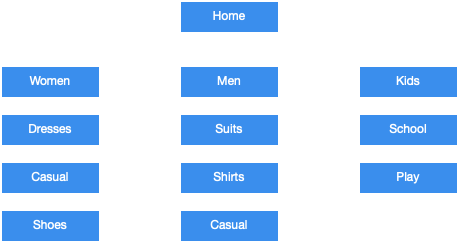 Now, imagine a well-organized library with different sections and sub-sections. This is your hierarchical structure. It starts with the homepage (the main hall of a library) and branches into main categories (sections), which then branch into subcategories (sub-sections).
This approach not only aids users in intuitively navigating through your content but also helps search engines understand and prioritize your site's content.
Crawlability
A search engine's bots, or crawlers, prefer structure to chaos. A hierarchical site is like a well-laid-out map, guiding these crawlers through your content efficiently, ensuring every page gets noticed and indexed correctly.
Organizational Clarity
Search engines like Google aim to present users with the most relevant results. A hierarchical website clearly delineates the relationship and relevance of content, aiding the search engines in accurately ranking your site in search results.
SEO Advantages of Hierarchical Structures
Enhanced User Experience
User experience is a significant ranking factor for Google. A hierarchical structure leads to an intuitive user journey, reducing bounce rates and increasing session duration.
For instance, if a visitor lands on the aforementioned online clothing store looking for shoes, a clear path to the 'Shoes' category enhances their experience and likelihood of a purchase.
Keyword Optimization
Hierarchical structures allow for the strategic placement of keywords. Main categories can target broader keywords, while subcategories can focus on more specific ones. This targeted approach avoids the pitfalls of keyword stuffing, keeping your content both user-friendly and SEO-friendly.
Internal Linking
Internal linking is a breeze with hierarchical structures. You can naturally link main categories to subcategories and related content, distributing page authority throughout your site and keeping users engaged longer.
Implementing a Hierarchical Structure
Where To Start
Begin by auditing your current site structure. Identify your main services or product categories – these will form the pillars of your hierarchy.
Best Practices
Consistency is key. Ensure each subcategory logically falls under its main category. Avoid having too many layers; a three-tier structure (homepage, main categories, subcategories) is typically most effective.
Tools and Resources
Leverage tools like Google Analytics for insights on how users currently navigate your site. Tools like Screaming Frog can help map out your current structure, highlighting areas for improvement.
Conclusion
In the digital marketing world, your website's structure plays a pivotal role in search engine visibility and user experience. By adopting a hierarchical structure, you're not just organizing content; you're enhancing the discoverability and usability of your site, paving the way for improved SEO performance and, ultimately, a stronger online presence.