Historically, Google has played a crucial role in web crawling; however, that may change.
Google, along with other search engines, use automated software known as crawlers or spiders to discover and index web pages across the Internet. These crawlers systematically browse websites, following links from one page to another, gathering information to be included in their search index.
By continuously crawling and indexing web pages, Google ensures its search results are up-to-date and relevant to users' search queries. This process allows Google to create a comprehensive and searchable index of web content, enabling it to deliver accurate search results in response to users' search queries.
Recent Changes in Google's Crawling Strategy
In a recent shift, Google has articulated a new strategy. According to Google analyst Gary Illyes, his mission for the year is to figure out how to crawl the web less than it currently does.
This change will be pivotal in Google's approach to web crawling, as it will break away from its historical pattern of extensive page crawls.
Other indicators of Google’s change in crawl strategy include a noticeable decline in the number of pages Google crawls compared to previous crawl practices, as indicated by recent Reddit threads among the SEO community.
This strategic pivot by Google signifies a fundamental reshaping of how the search engine giant navigates and indexes web content. These modifications will deeply influence businesses' strategies to improve their visibility and ranking on Google's search engine results pages.
Why Google Is Changing Their Crawl Strategy
Web crawling, particularly on Google's scale, is an energy-intensive process. It involves using large data centers, which house the servers required for crawling millions of websites. These data centers consume vast amounts of electricity to power servers and maintain optimal operating conditions, including cooling systems.
Additionally, web crawling generates substantial network traffic as crawlers request data from countless websites, increasing the load on the internet’s infrastructure.
The data collected by crawlers also needs to be stored and processed, further adding to the energy consumption, as storing massive amounts of web data and processing it to update search indexes are energy-demanding tasks.
Google's new crawling strategy aims to address these environmental concerns through several key initiatives. By crawling websites less frequently, Google reduces the overall workload on its servers, leading to less energy consumption in data centers.
The new approach of selective crawling focuses on high-value pages, meaning Google’s bot makes fewer unnecessary requests. This optimization will minimize the network traffic load, reducing the energy required for data transmission and processing. Enhancing the efficiency of Google’s bot will result in fewer resources for the same results, including using advanced algorithms to avoid redundant crawling and targeting content updates more precisely.
Technical Efficiency Will Impact Your SEO Strategy
Google's new crawling strategy strongly emphasizes technical and resource efficiency. Technical efficiency involves refining the algorithms and processes that govern Google’s bot, making it more streamlined. By improving the precision of the algorithms, Google will predict which web pages are more valuable to users, reducing the need for exhaustive crawling of the entire web.
This selective approach will look to crawl website pages that the algorithm determines are the most relevant and high-quality, cutting down on redundant and unnecessary crawling.
This new crawling strategy emphasizes quality when indexing web pages. This approach marks a significant shift from the traditional attempt to index as many pages as possible.
By prioritizing quality, Google aims to ensure that the pages included in its index provide valuable, relevant, and authoritative content to users. This means that rather than indexing vast numbers of pages indiscriminately, Google’s bot will now selectively target pages that meet higher standards of content quality and user engagement.
This focus on quality involves several key factors. First, pages that offer unique and substantial information are given priority. Google’s bot is designed to recognize content that adds value to the user experience, such as in-depth articles, comprehensive guides, and original research.
Secondly, the user experience on these pages is crucial; pages with fast load times, mobile optimization, and a clear, user-friendly layout are more likely to be indexed.
Additionally, signals such as user engagement metrics, including time spent on the page and bounce rates, play a role in determining a page's quality.
Potential Risks of Reduced Crawling
The reduction in Google's web crawling frequency carries several potential risks for marketers, fundamentally altering how they approach search engine optimization (SEO) and online visibility.
One of the most significant risks is the potential for decreased visibility in search engine results pages (SERPs). With fewer crawl visits, new content may take longer to be discovered and indexed by Google, delaying the new content’s appearance in search results.
This can be a real problem for time-sensitive content, such as news articles, event announcements, or promotional campaigns, which rely on rapid indexing to reach their audience effectively.
Another risk of this new crawl strategy is that infrequently updated pages are more likely to be overlooked. Websites that do not consistently publish fresh content or have significant updates might see a drop in crawl frequency.
This could lead to stale or outdated information remaining in Google's index, potentially harming the site's search ranking and user engagement.
For marketers, a greater emphasis will be placed on regularly updating web content to signal to Google that their site is active and worth revisiting.
Additionally, reduced crawling can impact the identification and resolution of technical issues. Regular crawling helps Google detect problems such as broken links, server errors, or security vulnerabilities. With less frequent crawling, these issues will often go unnoticed for extended periods, potentially harming the site's performance and reputation.
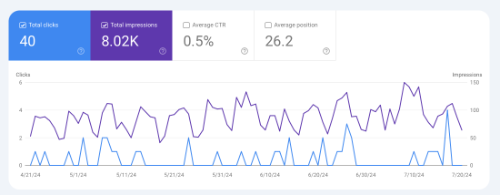 Marketers need to monitor their site’s health proactively, using tools like Google Search Console to identify and fix issues promptly.
Additionally, with this strategy change, the competition for crawling resources will intensify. As Google’s bot becomes more selective, websites must compete more aggressively to demonstrate their value and relevance to get the bot to crawl their pages.
This competitive environment means that marketers must prioritize high-quality content and robust technical SEO practices to ensure their site stands out and gets the attention it needs from crawlers.
Strategies to Mitigate Negative Impact
Ensuring high-quality content
One of the most effective strategies for marketers is to ensure the production and maintenance of high-quality content to avoid the potential negative impact of Google's reduced crawling.
High-quality content is defined by its ability to provide significant value to users, making it more likely to be prioritized by Google during its more selective crawling process. This approach helps maintain visibility in SERPs and enhances user engagement and satisfaction.
Several key attributes characterize high-quality content. First, it must be unique and original, offering information, insights, or perspectives not readily available elsewhere.
This uniqueness helps the content stand out to users and search engines, as Google increasingly favors content that adds value to the web.
Second, the content should be comprehensive and in-depth, thoroughly covering the topics it addresses. This depth demonstrates expertise and authority, making the content more likely to be deemed valuable by Google.
Another crucial aspect of high-quality content is its relevance and timeliness. Content that addresses current trends, user queries, and emerging topics is more likely to attract and retain user interest. Regularly updating content to reflect new information or developments ensures that it remains relevant and valuable over time.
Additionally, content should be well-structured and easy to read, with clear headings, concise paragraphs, and logical organization. This improves user experience and makes it easier for Googlebot to understand and index the content.
Using multiple elements, such as images, videos, and infographics, within a website’s page content can enhance its quality by making it more engaging and informative. These elements can help break up text, illustrate key points, and provide additional context, all contributing to a better user experience.
High-quality content also benefits from being optimized for SEO, including the use of relevant keywords, meta tags, and internal linking. This optimization helps search engines understand the content's context and relevance, increasing its chances of being indexed and ranked highly.
Marketers can better align their websites with Google's evolving crawling priorities by focusing on high-quality content. Ensuring that each piece of content is valuable, relevant, and well-optimized attracts Google’s attention and improves overall user satisfaction and engagement.
Strategies for content optimization
One fundamental aspect of content optimization is keyword research and usage. Identifying and incorporating relevant keywords that users are likely to search for helps signal to Google the content's relevance to specific queries.
Keywords should be naturally integrated into the content, including in headings, subheadings, and throughout the text, without resorting to keyword stuffing, which can be detrimental. Using long-tail keywords, which are more specific and less competitive, can help attract targeted traffic and improve the chances of ranking well.
Another critical strategy is creating compelling and descriptive meta tags, including title tags and meta descriptions.
These elements summarize the content to search engines and users, influencing click-through rates from search engine results pages (SERPs). A well-crafted title tag should be concise, include the primary keyword, and accurately reflect the content.
Similarly, the meta description should be engaging and informative and include relevant keywords to encourage users to click on the link.
Optimizing content also involves ensuring that it is well-structured and easy to read. This includes using clear and descriptive headings and subheadings to break up the text and guide readers through the content.
Bullet points, numbered lists, and short paragraphs can improve readability and user engagement. Additionally, internal linking to other relevant pages on the website can enhance navigation, distribute link equity, and help Google discover and index additional content.
Given the increasing use of mobile devices for web browsing, ensuring mobile-friendly content is crucial. Responsive design, fast loading times, and easy navigation on mobile devices are essential factors that influence both user experience and search engine rankings. Google's mobile-first indexing means that the mobile version of a website is now the primary version considered for indexing and ranking, making mobile optimization more important than ever.
Another effective strategy is regularly updating and refreshing content. Search engines favor fresh and up-to-date content, so revisiting older posts and updating them with new information, links, and multimedia can help maintain their relevance and improve their performance in search results.
By employing these content optimization strategies, marketers can enhance the visibility and effectiveness of their content despite Google's reduced crawling. Optimized content is more likely to be indexed and ranked well and attract organic traffic, ensuring the website performs effectively in search engine results.
Technical SEO Best Practices
Improving website structure and navigation
Improving a website’s structure and navigation is a vital strategy for mitigating the negative impact of Google's reduced crawling frequency.
A well-structured website with intuitive navigation enhances the user experience and makes it easier for search engines to crawl and index the content efficiently. This approach ensures that the most important and valuable pages are accessible and prioritized by Google’s crawler.
A clear and logical website structure is the foundation of effective navigation. This involves organizing content into categories and subcategories that make sense to users and search engines alike.
A hierarchical structure, where content is grouped into main topics with subtopics nested beneath them, helps create a coherent framework. This hierarchy should be reflected in the site's URL structure, with clear, descriptive URLs that indicate the content's position within the site's overall architecture.
For example, a blog post about SEO tips might have a URL like www.example.com/blog/seo-tips, indicating its place within the blog section under the SEO category.
Another crucial aspect is ensuring that essential pages are easily accessible from the homepage and other critical areas of the site.
This can be achieved through a well-designed main navigation menu that includes links to primary sections and important pages.
Additionally, incorporating breadcrumb navigation can help users and search engines understand the site's structure and easily backtrack to higher-level pages. Breadcrumbs provide a secondary navigation aid that shows users their current location within the site's hierarchy, improving usability and crawlability.
Internal linking is a powerful tool for improving website structure and navigation.
By strategically linking related pages within the content, you create a web of connections that help users discover more content and guide search engines through the site.
Internal links distribute link equity, boost the authority of linked pages, and help Google find and index deeper pages that might otherwise be overlooked.
The anchor text used for internal links should be descriptive and relevant to the linked page, providing a clear context for users and search engines.
Another important consideration is ensuring that the website is free of broken links and orphaned pages. Broken links can disrupt the user experience and impede search engine crawlers, leading to incomplete indexing.
 Regularly auditing the site to identify and fix broken links ensures that both users and search engines can navigate the site smoothly.
Orphaned pages, which are pages not linked from any other part of the site, can be difficult for search engines to discover. Ensuring all pages are linked from other parts of the site helps maintain a cohesive structure and improves crawlability.
Optimizing images, leveraging browser caching, and minimizing the use of heavy scripts are some ways to improve page load speed. Faster-loading pages not only enhances the user experience but also makes it easier for search engines to crawl more pages within the site's allocated crawl budget.
Enhancing site speed and mobile optimization is crucial for mitigating the negative impact of Google's reduced crawling frequency.
Faster-loading websites optimized for mobile devices provide a better user experience and improve their chances of being efficiently crawled and indexed by Google. These factors are increasingly important as Google shifts towards prioritizing high-quality, user-friendly websites.
Site speed directly affects user experience and search engine rankings. Users expect websites to load quickly; slow-loading pages can lead to higher bounce rates, lower engagement, and decreased conversions.
For search engines, faster-loading sites are easier to crawl because Google’s bot can process more pages within its allocated crawl budget.
Optimizing site speed involves several key practices. Compressing images to reduce their file size without sacrificing quality can significantly decrease load times.
Leveraging browser caching allows frequently accessed resources to be stored locally on users' devices, reducing the need for repeated downloads. Minimizing the use of heavy scripts and external plugins also helps streamline the loading process.
Mobile Optimization
Mobile optimization is equally important. Google's mobile-first indexing means that a website's mobile version is considered the primary version for indexing and ranking purposes.
With this mobile-first indexing, it is essential to ensure a website is fully responsive and provides a seamless experience across various screen sizes.
A mobile-optimized site should have a clean, intuitive design, easy navigation, and touch-friendly elements. The text should be readable without zooming, and buttons should be large enough to be easily clickable on smaller screens.
Additionally, mobile optimization involves optimizing for speed on mobile networks, which are typically slower than broadband connections. Techniques such as Accelerated Mobile Pages (AMP) can help create fast-loading mobile web pages.
Reducing the number of redirects and optimizing code for efficiency can also enhance mobile performance. These optimizations ensure that mobile users have a smooth and pleasant experience, which positively impacts engagement metrics and search engine rankings.
By focusing on site speed and mobile optimization, marketers can significantly enhance the user experience, leading to higher satisfaction and better engagement.
These improvements make it easier for Google’s bot to crawl and index the site effectively, ensuring valuable content is discovered and ranked appropriately.
In an environment where Google's crawling resources are becoming more selective, these optimizations are critical for maintaining and improving a website's visibility and performance in search results.
Enhancing site speed and mobile optimization helps mitigate the potential negative impacts of reduced crawling frequency and positions the website for long-term success in an increasingly mobile-centric digital landscape.
Effective Use of Sitemaps and Robots.txt
Using sitemaps and the robots.txt file effectively is a critical strategy for mitigating the negative impact of Google's reduced crawling frequency. These tools help guide search engine crawlers, ensuring that a website's most important and relevant pages are discovered and indexed efficiently.
Sitemaps are files that provide a roadmap of a website's structure, listing all the pages and their hierarchical relationships. By submitting a sitemap to Google, webmasters can ensure that Google’s bot is aware of all the critical pages on the site, even those that may be harder to find through regular crawling.
This is particularly important for large websites with complex structures or new websites with few inbound links. A well-constructed sitemap can include additional information, such as the last modified date, which helps Google prioritize crawling more recent and updated content.
Regularly updating the sitemap ensures that it accurately reflects the current structure and content of the website, making it easier for Google to keep the index up to date.
The robots.txt file, on the other hand, is a simple text file placed in a website's root directory that instructs search engine crawlers which pages or sections of the site should not be crawled. This file helps manage crawler behavior, ensuring that resources are focused on the most critical parts of the website.
For instance, the robots.txt file can disallow pages with duplicate content, administrative pages, or specific resources that do not need to be indexed. By controlling crawler access, webmasters can prevent Google’s bot from wasting its crawl budget on less important or redundant pages, thereby enhancing the efficiency of the crawling process.
Using sitemaps and robots.txt in tandem creates a more efficient crawling and indexing strategy. Sitemaps direct crawlers to the essential and high-value pages, while robots.txt guides them away from non-essential or problematic areas.
This coordinated approach ensures that Google’s limited crawling resources are used optimally, improving the chances that the most relevant and valuable content is indexed.
Additionally, these tools help webmasters identify and resolve crawling issues. Google Search Console provides insights into how Google’s bot interacts with sitemaps and robots.txt, highlighting any errors or issues that might prevent proper indexing.
By regularly monitoring and updating these files based on the feedback from Google Search Console, webmasters can maintain an efficient and effective crawling process.
Conclusion
In this article, we’ve attempted to address Google's recent shift towards reduced web crawling and its implications for marketers. Google's web crawling process, essential for indexing the web and providing relevant search results, has traditionally been extensive and frequent. However, recent changes indicate a move towards more selective and efficient crawling to reduce energy consumption and environmental impact.
Google’s shift in crawl strategy clearly focuses on the quality of crawls rather than quantity, and they are prioritizing value pages for their crawl budgets.
These changes pose potential risks for marketers, including delayed indexing of new content, neglect of infrequently updated pages, and prolonged technical issues due to less frequent crawling. To mitigate these risks, marketers must ensure high-quality content that is unique, comprehensive, and regularly updated.
Effective content optimization, including keyword usage, meta tags, and multimedia integration, is essential to maintain visibility in search results.
Improving website structure and navigation enhances user experience and facilitates efficient crawling by Google’s bot.
A clear hierarchical structure, internal linking, and mobile-friendly design are crucial for maintaining site accessibility and performance. Additionally, optimizing site speed and ensuring mobile responsiveness is vital to providing a seamless user experience and improving search engine rankings.
The effective use of sitemaps and robots.txt files helps guide search engine crawlers to important pages and away from less critical areas. Sitemaps ensure that all essential pages are discovered and indexed, while robots.txt files manage crawler access to optimize the use of crawling resources.
Regular monitoring and updates based on feedback from Google Search Console help maintain an efficient crawling process.