A survey that came out by Gartner revealed that marketing analytics is only influencing 53% of business and marketing decisions.
This is a surprisingly low number based on the importance that data analytics can have on a marketing strategy.
I continue to see the challenge in marketing departments and business offices: What is being measured regarding digital marketing performance is woefully lacking in actionable or appropriate detail.
During a recent conversation that I had with a business owner and his marketing person, they shared the following website traffic metrics that they track every month:
- Users
- Sessions
- Page Views
- New Users
Each of these metrics were compared with to the previous year's numbers. Though these metrics are important, they are less than informative and they certainly don’t provide enough information to take action on.
Let’s say, for example, that the number of users for the current month was down from the previous month. What would be the action that should be taken to resolve this problem? Would it actually be a problem? Tracking just these metrics, though better than not tracking anything, is no-where near complete enough to make any decision on what to do.
The Relationship Between Digital Marketing and Analytics
Since the advent of digital marketing the great promise has been the ability to know how your marketing efforts are performing. Instead of getting metrics that are actionable, unfortunately most businesses are getting metrics like those that I outlined above.
The challenge, I believe, is two-fold. First there is too much data available and the shear volume of that data can become overwhelming. Secondly, the data that you can assemble to demonstrate what is happening seldom answers the question “why did that happen”. To answer the "why" there is a need for more detailed analysis which requires more detailed data.
What we’re going to attempt to demonstrate with this article is how to provide the detailed analysis and data for a hypothetical company to make a decision on the efforts and money they are spending to drive people to their website.
What Is The Quality Of The Traffic To Your Site
To walk through the following examples we're going to use a hypothetical company's Google Analytics data. We'll be evaluating based on one month's worth of data from August of this year.
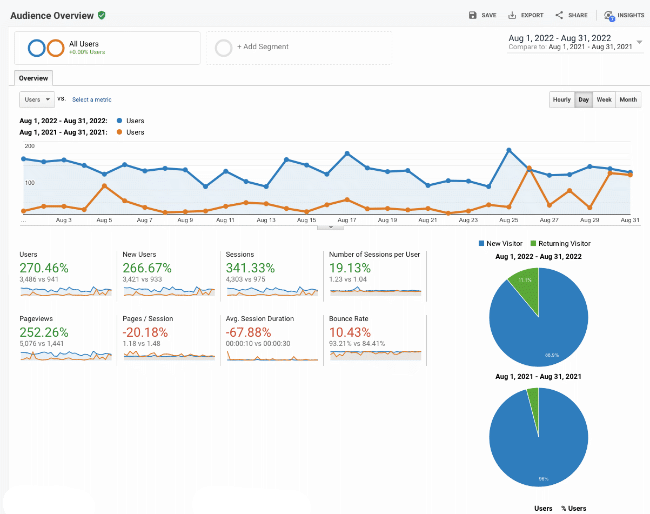
Here's a look at their Audience Overview report. Through out this article we will be referring to this set of data and use it to explore how to get more out of it.
This first report is what most people use when reporting on the performance of their website. It shows an at-a-glance overview of users, sessions, page views, time on page, bounce rate and a few other metrics. Again, I'm not saying that this is bad information, it's not. It's just not the entire picture and it doesn't give you enough information to improve your marketing from.
 Geography: Knowing where people, who are arriving on your website, are coming from can have a large impact on how you view your data. In this example our hypothetical company does business in a three state area; MI, IN, & OH. Having traffic coming to their site from outside that 3 state area is a waste of marketing dollars. Instead of just reporting on total traffic numbers (as seen in the Audience Overview), let’s walk through how you can find out where your website traffic is coming from, for more actionable information.
As you can see in the default version of the audience overview screenshot above, there were 3,486 users of the website during the month of August. The challenge with this metric is that this company has no idea if the money that they are spending on driving people to their website are coming from the areas that they do business in.
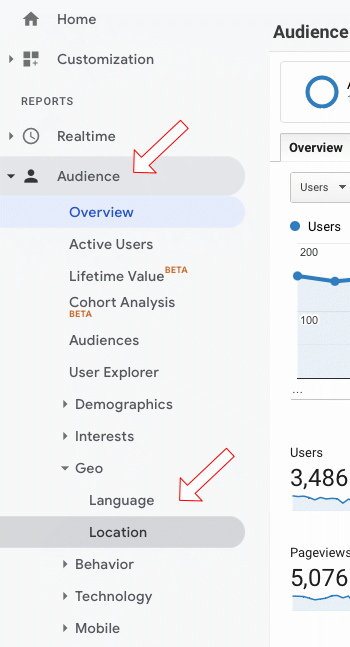
To find out that information, within Google Analytics you navigate (in the left hand column) to Audience > Geo > Location and this will reveal the location of the visitors that are coming to the website.
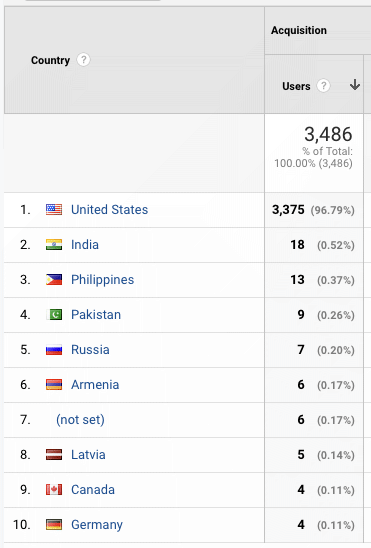 Now what you see is that the majority of their traffic is coming from the US which is good, however, there is traffic that is coming from other countries. Based on this company's focus of selling within a 3 state area, this out-of-country traffic is not going to help them grow their business. During this month, this company had a total of 132 visits to their website from outside of US.
So, if you're reporting that marketing dollars are bringing in 3,486 website visitors for the month (getting that data from just the overview report), though that is true, it's not a true representation of the "quality", or lack of quality, of the website traffic.
Now, let's dive just a little bit deeper. This time let's take a look at the traffic at the state level. Remember, this company only does business within a 3 state area.
By clicking on the United States link, you are taken to a report showing the traffic coming from various states across the US. The traffic that this website received during the month came from 44 different states.
That's 41 states that the company does not do business in!
There are 2 problems with this. First, their marketing dollars are being wasted driving traffic from states that they don't do business in. Second, if you're only reporting, again, from the information that is on the Audience Overview report, the 3,486 number, the data is misleading.
Here's how it plays out. By reporting just the Audience Overview data, again you're reporting 3,486 visitors to the website for the month. However, if you report on visitors to the website that come from the three states that the company does business in (MI, OH, IN) the the "quality" traffic that came to the site for the month was 2,319. That's a difference of over 33%! That's a huge difference when it comes to determining whether or not your marketing dollars are bringing any value.
Conclusion
This is just one example of how taking a deeper dive into your analytics can have a meaningful difference in the marketing results that a company can realize by being able to make correct decisions based on data. If you have any questions on this or any other digital marketing strategies, just send us a note and we'll be sure to answer any questions you might have.