Marketing automation is essential to B2B companies as it streamlines, automates, and measures marketing tasks and workflows, enabling businesses to increase operational efficiency and achieve revenue growth.
In the competitive landscape of B2B marketing, fostering long-lasting relationships with clients and guiding them through complex sales cycles necessitates a personalized and targeted approach. Marketing automation allows companies to create, execute, and analyze data-driven campaigns with precision and at scale, ensuring that prospects receive the right content at the right time.
Moreover, it helps marketers identify high-value leads, nurture them with tailored content, and ultimately convert them into loyal customers.
By leveraging marketing automation tools, B2B companies can make data-driven decisions, optimize marketing spend, and enhance their overall marketing strategy, driving sustainable business growth and success.
Essential elements of a B2B marketing automation strategy
The first step with a marketing automation strategy is the creation of an Ideal Client Profile. An Ideal Client Profile (ICP) is a comprehensive description of the type of company that would gain the most value from your product or service and, in turn, provide the most value to your business. ICPs are a vital component of marketing and sales strategy. They help companies identify, target, and prioritize potential clients most likely to convert and contribute to long-term success.
Creating an ICP considers various factors, including the target company data such as company size, revenue, industry, and location, along with pain points and decision-making processes.
Investing time and effort in creating ICPs can yield significant benefits for companies. First, it helps in aligning marketing and sales teams around a common understanding of the ideal customer, ensuring that resources are efficiently allocated to target high-value prospects.
Secondly, ICPs enable businesses to tailor their messaging and marketing campaigns to resonate with their target audience's specific needs, preferences, and pain points. This, in turn, increases the chances of successful conversions and fosters lasting customer relationships.
Lastly, ICPs assist in streamlining the lead qualification process, ensuring that marketing and sales efforts focus on nurturing the right leads and minimizing time spent on low-value prospects.
For example, let's say you own a manufacturing company specializing in making components for other larger parts. Your ICP might look like this:
Industry: Automotive parts manufacturers
Company size: 100 to 250 employees
Location: Within a 50-mile radius of your company
Pain points: limited availability of the parts that you make, poor delivery times from current vendors, poor customer service from current vendors
By identifying and targeting businesses that fit this ICP, you can craft marketing campaigns that directly address their needs, making it more likely that they will choose your company for their needs.
In doing so, you can focus on attracting customers who fit your business perfectly and build lasting relationships that contribute to your overall success.
Segmentation based on behavior and demographics
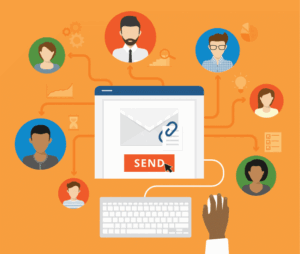 Segmenting your email list is an essential practice for small business owners and marketers to optimize the effectiveness of marketing automation. By dividing your subscribers into smaller, more specific groups based on shared characteristics or behaviors, you can deliver highly targeted and personalized content that resonates with their unique interests and needs.
Segmentation results in higher open rates, click-through rates, and, ultimately, improved conversion rates.
There are various ways to segment your email list. Here are a couple of examples:
Demographics: This is one of the simplest ways to segment your list. Grouping subscribers based on factors such as age, gender, location, or income level can help you tailor your messaging and offers to their specific preferences.
For example, if you run a clothing store, you can send targeted promotions to male and female subscribers separately, showcasing the most relevant products for each group.
Purchase history: Another effective way to segment your list is based on your subscribers' interactions with your business. Grouping customers according to their past purchases enables you to send targeted offers and recommendations that are more likely to appeal to them.
For instance, if you own a bookstore, you can send personalized reading suggestions to customers who previously bought mystery novels, increasing the likelihood that they will be interested in your recommendations.
Remember, it's crucial to track and analyze the performance of your segmented email campaigns. This will help you identify areas for improvement and fine-tune your marketing strategy over time.
Investing time in segmentation and delivering relevant content to your subscribers can build stronger connections with your audience and ultimately drive more sales for your business.
Setting clear goals and objectives
Key Performance Indicators (KPIs) are quantifiable metrics that help you evaluate the effectiveness of your marketing automation efforts. KPIs provide valuable insights into the performance of marketing campaigns and enable you to make data-driven decisions to optimize your marketing strategy.
By regularly tracking and analyzing KPIs, you can identify areas for improvement, allocate resources efficiently, and ultimately, drive better results for your business.
To measure KPIs for marketing automation, consider the following metrics:
Open rate: This metric represents the percentage of recipients who opened your marketing emails. A high open rate indicates that your subject lines are engaging and relevant to your audience. Tracking open rates over time can help you optimize your email content and improve your email marketing performance.
Click-through rate (CTR): CTR measures the percentage of email recipients who clicked on one or more links within your email.
A high CTR indicates that your email content is engaging and encourages readers to take action. To improve your CTR, consider refining your calls to action (CTAs) and making them more compelling.
Conversion rate: This is the percentage of recipients who completed a desired action, such as making a purchase or signing up for a webinar. Monitoring conversion rates enables you to determine the effectiveness of your marketing campaigns and identify any bottlenecks in the customer journey.
Return on Investment (ROI): ROI is the ratio of profits generated by your marketing efforts compared to the costs incurred. To calculate your marketing automation ROI, consider factors such as software costs, campaign expenses, and staff salaries. A high ROI indicates that your marketing automation efforts are delivering value for your business.
To effectively measure KPIs, establish a regular reporting schedule and set realistic benchmarks based on your industry and the size of your business. Use marketing automation tools to collect and analyze data and make data-driven decisions to optimize your marketing strategy. Continuously monitoring KPIs will help you identify trends and make necessary adjustments to achieve your marketing goals.
Aligning goals with overall business objectives
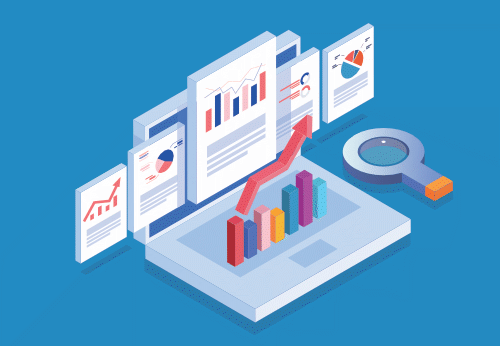 Aligning marketing automation KPIs with broader business KPIs is crucial for ensuring that your marketing efforts contribute effectively to your company's overall goals and objectives. By establishing a clear connection between marketing automation metrics and business outcomes, you can demonstrate the value of your marketing initiatives, justify marketing investments, and foster collaboration between marketing and other departments within your organization.
For example, one key business KPI might be increasing revenue by a certain percentage within a specific period. To align your marketing automation KPIs with this objective, you could focus on metrics that directly impact revenue, such as lead conversion rate, average deal size, or customer lifetime value. By optimizing these marketing automation KPIs, you can directly contribute to achieving the desired revenue growth.
Another example of a business KPI could be improving customer retention or reducing churn rate. In this case, marketing automation KPIs to align with this goal might include customer engagement metrics, such as email open rates, click-through rates, and post-purchase follow-up interactions.
By enhancing these metrics through targeted and personalized marketing campaigns, you can increase customer satisfaction and loyalty, ultimately reducing churn rate and achieving your business KPIs.
Aligning marketing automation KPIs with business KPIs helps ensure that your marketing initiatives drive tangible results and fosters a data-driven culture within your organization. By focusing on the metrics that truly matter and tying your marketing efforts to broader business goals, you can create a more cohesive, results-oriented marketing strategy that delivers long-term value and success for your company.
Personalization: Tailoring content to the target audience
Personalizing marketing automation is essential for connecting with your target audience and ensuring your campaigns resonate with their unique interests, preferences, and pain points. By tailoring content to the specific needs of your audience, you can create more engaging and relevant marketing experiences, leading to higher open rates, click-through rates, and, ultimately, more conversions.
One way to personalize marketing automation is through the use of dynamic content. Dynamic content allows you to display different versions of your marketing materials, such as emails or landing pages, based on the unique attributes of each recipient. For example, you could use dynamic content to show different product recommendations or promotional offers based on a subscriber's past purchase history or browsing behavior. This ensures that each recipient receives content that is specifically tailored to their preferences and needs, increasing the likelihood of engagement and conversion.
Another approach to personalization is leveraging segmentation within your marketing automation strategy. As mentioned previously, segmentation involves dividing your email list into smaller groups based on shared characteristics or behaviors. By segmenting your audience, you can create highly targeted campaigns that address each group's specific interests or challenges.
For instance, you could create separate email nurture sequences for new subscribers versus existing customers, each containing content and offers specifically designed to appeal to their unique stage in the customer journey.
To further enhance personalization, consider incorporating personalized merge tags into your marketing automation content. These merge tags allow you to insert recipient-specific information, such as their name or company, directly into your marketing materials. By addressing recipients by name or referencing their company, you can create a more personal connection and make your marketing messages more relevant and engaging.
By investing in personalized marketing automation, you can create more meaningful connections with your target audience, leading to stronger customer relationships, increased brand loyalty, and, ultimately, greater business success.
Using dynamic content and merge tags
Incorporating personalized merge tags into your content means adding placeholders in your marketing materials that will be automatically replaced with specific information relevant to each recipient. This technique allows you to customize your messaging for each individual subscriber, making it more personal and engaging.
Merge tags are typically used in email marketing, but they can also be applied to other forms of digital communication. When you use a merge tag in your content, the marketing automation platform replaces it with the corresponding data stored in your contact database for each recipient. This can include details such as their name, company, job title, or any other information you have collected about them.
For example, if you include the merge tag {{first_name}} in your email greeting, it will be replaced with the actual first name of each recipient when the email is sent. Instead of receiving a generic "Hello," the recipient will see "Hello, [their first name]," making the message feel more personal and tailored to them.
Using merge tags helps create a more personalized experience for your subscribers and demonstrates that you understand and value them as individuals. This can increase engagement, higher click-through rates, and more conversions. By incorporating personalized merge tags into your marketing automation content, you can create more meaningful connections with your audience and enhance the overall effectiveness of your campaigns.
Lead nurturing
 Lead scoring is a methodology marketers, and sales teams use to rank prospects based on their perceived value and readiness to make a purchase. By assigning a numerical score to each lead, you can prioritize your marketing and sales efforts, focusing on the most promising prospects while nurturing lower-scoring leads until they become sales-ready. This enables you to allocate resources more efficiently and improve conversion rates.
To implement effective lead scoring, consider the following best practices for setting up scores at various points of the buyer's journey:
Define criteria: Collaborate with your marketing and sales teams to identify the characteristics and behaviors that indicate a prospect's likelihood to convert. These criteria can include demographic information, firmographic data, engagement with your content, and interactions with your sales team.
Assign point values: Assign point values to each criterion based on its importance in the buyer's journey. More significant indicators, such as requesting a product demo or engaging with high-value content, should be assigned higher point values, while lower-value actions like subscribing to your newsletter receive lower point values.
Set up scoring tiers: Create scoring tiers to categorize leads based on their total scores. For example, you could define tiers such as "hot leads" (high-scoring leads), "warm leads" (moderately scoring leads), and "cold leads" (low-scoring leads). Adjust your marketing and sales strategies accordingly for each tier, prioritizing outreach to hot leads while nurturing warm and cold leads through automated marketing campaigns.
Monitor and adjust: Regularly review and analyze your lead scoring model to ensure that it accurately reflects the buyer's journey and your business objectives. Make necessary adjustments to the criteria and point values based on the insights you gather and feedback from your sales team.
Align lead scoring with buyer's journey stages: Adapt your lead scoring model to reflect the various stages of the buyer's journey, such as awareness, consideration, and decision. Assign points for specific actions or engagements that align with each stage, enabling you to tailor your marketing and sales efforts to the needs and interests of prospects at different points in the journey.
By implementing a lead scoring system that considers the various stages of the buyer's journey, you can better prioritize your marketing and sales efforts, focusing on the most promising prospects and improving overall conversion rates.
Implementing a multichannel approach
Implementing a multichannel approach in marketing automation means engaging with your target audience through multiple communication channels, such as email, social media, website, mobile messaging, and webinars. Utilizing various touchpoints can create a seamless and consistent experience for your prospects and customers, increasing the likelihood of conversion and building stronger brand loyalty.
A multichannel approach is considered a best practice for marketing automation for several reasons:
Increased reach: Different prospects and customers have varying preferences regarding communication channels. By adopting a multichannel approach, you can reach a broader audience, catering to their individual preferences and ensuring that your marketing messages are more likely to be seen and engaged with.
Enhanced customer experience: Engaging with your audience through multiple channels creates a more cohesive and consistent customer experience. By delivering relevant content and offers across various touchpoints, you can reinforce your brand messaging and create a seamless journey for your prospects as they move through the sales funnel.
Improved targeting and personalization: A multichannel approach allows you to gather more data on your prospects and customers as they interact with your brand across different platforms. This data can be used to enhance targeting and personalization, enabling you to deliver more relevant and engaging marketing content that resonates with your audience.
Greater resilience: Relying on a single marketing channel can be risky, as changes in technology, user behavior, or platform policies can significantly impact your marketing efforts. By diversifying your marketing channels, you can mitigate these risks and ensure that your marketing strategy remains effective even if one channel underperforms or becomes unavailable.
Higher conversion rates: Engaging with prospects through multiple channels increases the likelihood of conversion, as they are more likely to take action if they encounter your brand consistently across various touchpoints. A multichannel approach also enables you to optimize each channel for different stages of the buyer's journey, ensuring that your marketing efforts are aligned with your prospect's needs and preferences at every step.
To implement a successful multichannel marketing automation strategy, it's essential to maintain consistent brand identity and messaging across all channels. Additionally, regularly track and analyze the performance of each channel to optimize your efforts and allocate resources effectively. By embracing a multichannel approach, you can create a more comprehensive and engaging customer journey, ultimately driving better results for your business.
Drip campaigns: Designing effective email sequences
Effective email sequences for a drip campaign are a series of automated, targeted, and timely emails designed to nurture leads, engage prospects, and move them through the sales funnel. These sequences aim to provide valuable and relevant content to the recipients, addressing their pain points and building trust in your brand. By delivering the right content at the right time, you can guide prospects toward making a purchase decision.
In a B2B context, a drip campaign email sequence can be used to educate potential customers about your product or service, share industry insights, and demonstrate your company's expertise. For example, imagine a B2B software company that offers a project management solution. They could create a drip campaign targeting potential clients who have expressed interest in their software but haven't yet converted.
Welcome email: Start the sequence with a welcome email, thanking the prospect for their interest and providing an overview of the upcoming content they can expect to receive. This email sets the tone for the campaign and establishes expectations.
Educational content: Share a series of emails that educate prospects on the benefits of using project management software, highlighting specific features and use cases relevant to their industry. This could include case studies, whitepapers, or blog articles that showcase your software's capabilities and how it can help improve efficiency and collaboration.
Personalized demo offer: After providing valuable educational content, send an email offering a personalized product demo, allowing prospects to see firsthand how your software can address their specific pain points and streamline their processes.
Testimonials and success stories: Share testimonials and success stories from satisfied customers in the same industry or with similar challenges. This helps to build trust and credibility, showing prospects that your software has a proven track record of delivering results.
Limited-time promotion: Create a sense of urgency with a limited-time offer or promotion, encouraging prospects to take action and make a purchase decision.
Follow-up: Finally, send a follow-up email to gauge their interest, address any remaining concerns, and determine if they are ready to move forward with your solution.
A B2B business can nurture leads, showcase their expertise, and ultimately convert prospects into customers by creating a targeted and engaging drip campaign email sequence.
Evaluating KPIs and ROI
Continuous improvement and iterative changes are essential components of a successful marketing automation strategy. The digital marketing landscape constantly evolves, and customer preferences and behaviors can shift over time. To stay competitive and maximize the effectiveness of your marketing automation efforts, it's crucial to regularly evaluate, refine, and optimize your campaigns, processes, and technology.
There are several aspects to consider when implementing continuous improvement and iterative changes to your marketing automation strategy:
Data-driven decision-making: Rely on the data collected from your marketing automation platform and other analytics tools to identify areas for improvement. Analyze key performance indicators (KPIs) like open rates, click-through rates, and conversion rates to understand what's working and what's not. This will help you make informed decisions about which changes to implement and why.
A/B testing: Conduct A/B tests on various elements of your marketing automation campaigns, such as subject lines, email content, landing pages, and call-to-action buttons. By comparing the performance of different versions of these elements, you can determine which is more effective and make data-driven adjustments to optimize your campaigns.
Customer feedback: Actively seek feedback from your customers and prospects to gain insights into their needs, preferences, and pain points. Use this information to inform your marketing automation strategy and ensure that you are addressing the most relevant issues and concerns.
Regular reviews: Schedule periodic reviews of your marketing automation strategy to assess its effectiveness and identify opportunities for improvement. This could involve reviewing your lead scoring model, segmenting your email lists, or evaluating the performance of different marketing channels.
Adapt to industry trends and technological advancements: Stay informed about the latest trends and developments in the marketing automation space, and be prepared to adapt your strategy as needed. This could involve embracing new communication channels, incorporating AI-driven personalization, or adopting new marketing automation tools and technologies.
Collaboration and communication: Foster a culture of continuous improvement by encouraging collaboration and open communication between your marketing, sales, and other relevant teams. Share insights, challenges, and successes to promote a learning-oriented mindset and drive ongoing refinement of your marketing automation strategy.
By embracing continuous improvement and iterative changes, you can ensure that your marketing automation strategy remains agile, relevant, and effective in driving results for your business. Regularly evaluate your campaigns and processes, leverage data and customer feedback, and be prepared to adapt as needed to stay ahead of the competition and continue delivering value to your customers.
Adapting to changing industry trends and best practices
Conclusion
Recap of best practices
In conclusion, marketing automation is a powerful tool for B2B companies, enabling them to engage with prospects and customers more effectively and efficiently. By developing a comprehensive strategy that includes defining your ideal client profile, segmenting your email list, setting KPIs, personalizing content, and implementing a multichannel approach, you can optimize your marketing efforts and drive better results for your business.
The key to success with marketing automation lies in continuously monitoring, evaluating, and refining your campaigns and processes. By leveraging data-driven insights, A/B testing, and customer feedback, you can make informed decisions about enhancing your strategy and ensuring that it remains agile and relevant in a constantly evolving digital landscape.
By embracing these best practices and fostering a culture of continuous improvement, you can unlock the full potential of marketing automation, driving higher engagement, stronger customer relationships, and, ultimately, greater business success.
If you'd like more information about how marketing automation can help your company increase the quality of your sales leads, let's schedule a time to talk.