It’s no secret that online privacy is a big thing, and there are a lot of changes happening with privacy and online marketing.
Google’s efforts to eliminate third-party cookies within their Chrome browser are coming into play by the end of 2023, which will impact many marketing strategies.
In this article, we will look at what this initiative is, how it will impact digital marketing strategies, and what adjustments businesses can make to their digital marketing strategy to minimize the impact of this initiative.
Google’s Third Party Cookie Depletion
Google has announced that it will stop the use of third-party cookies in its Chrome browser by the end of 2023. Though this may seem to be a long time from now, the time will pass quickly, and you can never start preparing for a change to your marketing strategy too soon.
What Is A Third-Party Cookie
Cookies are files put on a website user’s computer to serve functions like saving a user from having to enter their name in a website form repeatedly.
Basically, websites will use cookies to determine if you’ve visited the site in the past and what type of information you entered into the website. In their purest use, cookies are designed to improve the user experience by personalizing the information presented to users and saving basic user information such as name and email address.
 There are essentially two types of cookies that users will encounter in a typical website visit, first-party cookies, and third-party cookies.
First-party cookies are files placed on a user’s computer directly from the website they are visiting.
As an example, if you were to visit ESPN’s website at espn.com, your browser would receive and save on your computer a tiny text file (cookie) that contains information about your visit.
According to ESPN’s cookie policy, their first-party cookies will allow you to do things on their site, such as:
- Keeping you logged in to “subscriber” areas
- Holding tickets that you may purchase within the shopping cart
- What pages you frequently engage with on your visits to their websites
- Areas of interest that you’ve demonstrated so that they can offer a more personalized experience
- User choices such as font sizes, so you don’t have to reset your preferences every time you visit the site.
Third-party cookies are small text files placed on your computer from a company other than the company whose website you’re visiting.
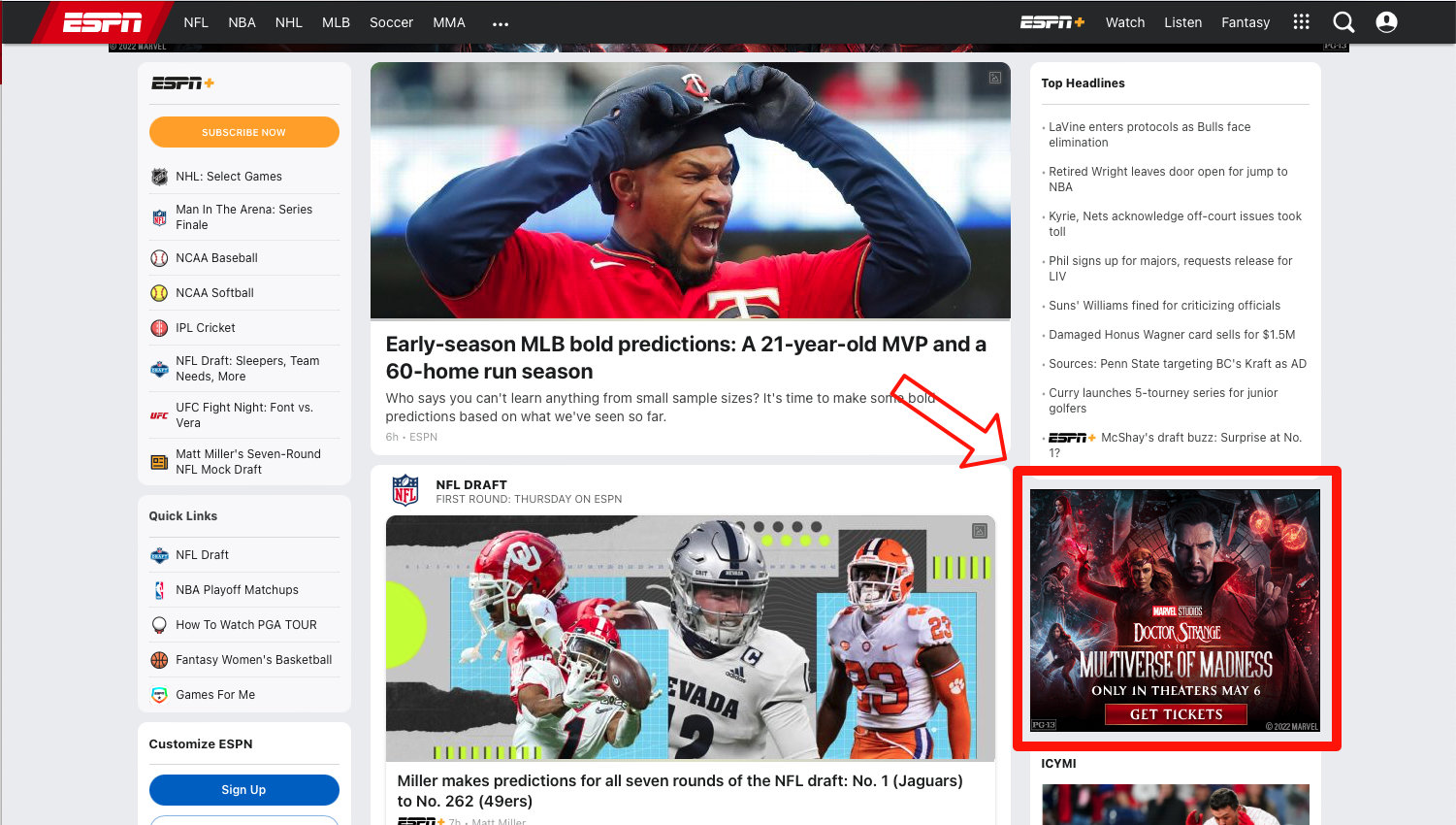 Let’s go back to our visit to ESPN’s website. As you’ll notice, on the right side of their home page, there is an ad for an upcoming Marvel Studio movie, Dr. Strange. The company that placed this ad on ESPN’s website is Fandango, an entertainment ticketing company. It’s a good bet to think that Fandango has established a “third-party” cookie on your computer via this ad.
There are several reasons why Fandango would want to place a cookie on your computer. The most likely explanation would be to be able to continue to show you ads for their services or for the Dr. Strange movie, in particular, as you visit other websites on the Internet.
This type of digital marketing is referred to as re-targeting or re-marketing, and it’s a highly effective method of promoting a company’s brand, products, or services.
No Need To Panic
There are literally hundreds of changes in the digital marketing world every year. It wasn’t long ago that Google’s move to a mobile-friendly position for search ranking was termed mobilegeddon. Everyone was confident that the Internet, as we knew it, would never be the same…and yet we survived.
The same will happen with the elimination of third-party cookies.
In fact, Google isn’t even the first company to eliminate or depreciate third-party cookies. Apple’s Safari browser and Mozilla’s Firefox browser already block third-party cookies (see, and the Internet hasn’t broken).
The first thing to do in answer to this third-party cookie issue is to realize that Google is not eliminating first-party cookies. By adjusting your strategy to become less dependent upon third-party cookies will help you overcome the loss.
Increasing your dependency on first-party cookies means taking ownership of your business relationships with your customers and prospective customers through alternative tactics. A couple of ways that you can adjust your digital marketing strategy in light of the third-party depreciation are:
- Increase your newsletter database. Utilize digital campaigns to drive people to sign up for your newsletter on your website. This will give you ownership of the data and allow you to increase your one-to-one marketing relationships.
- Gated content is another excellent opportunity to utilize first-party cookies and own the data. By creating valuable content that your customers and prospective customers are looking for, you accomplish two things. First, you own your data, and secondly, you’re establishing your company as a thought leader within your industry.
Conclusion
The elimination of third-party cookies is going to happen and whether it turns out to be good for user experience or not, remains to be seen. It's important to now, however, that this is not the end of the world but you do have to make adjustments to your marketing strategy and the sooner you make a shift in directions the better. If you have questions about the elimination of third-party cookies or anything related to digital marketing just reach out and we'll be more than happy to get you answers.