The average conversion rate across all industries, as measured by Rule Analytics, is 2.9%. All industries are different, with the lowest having a conversion rate of 1.8% and the highest being 4.6%. This can be very surprising data for many. This is why it is critical that you take conversion rate optimization (CRO) seriously.
Website conversions vary between businesses or organizations. For B2C companies, the ultimate conversion is a sale; for B2B companies, a sales lead; and for nonprofits, a donation. However, regardless of the type of business or organization, many “upstream” conversions must happen before a customer, client, supporter, or donor commits to the ultimate conversion.
Here’s a couple of examples of earlier conversions that have to happen:
B2C Companies: Most “upstream” conversions for companies that sell to consumers have something to do with product research.
B2B Companies: Generally speaking, conversions for these companies that happen before a buying decision will involve both company and service research.
Nonprofit Organizations: People interested in supporting your organization will generally begin by evaluating your organization’s mission. They’ll want to understand your successes, and most importantly, they’ll look for trust-building elements.
Rather than solely focusing on the ultimate conversion, consider conversions that happen at different stages of your customer, client, or donor’s journey to that ultimate conversion. Because conversions happen at varying stages of their decision-making process, it’s essential to view the various pages of your website as they relate to your audience’s journey. Each page relevant to that journey should have a conversion goal.
 Most companies and organizations think of conversion rate optimization as a task that applies to the website as a whole. They pour their energy into creating flashy homepage calls to action(CTA), improving overall site speed, or ensuring every form is above the fold. While these tactics are essential, they often overlook a critical truth: not every page on their website is designed to achieve a conversion goal. By focusing on the website as a single entity for optimization, companies and organizations miss out on the real potential of their content—maximizing the specific purpose each page serves.
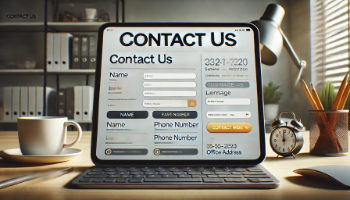
Every page on your website has a unique role in guiding your visitors through their journey. A blog post may aim to educate or generate interest, a service page should build trust and prompt an inquiry, and a contact page clearly aims to capture specific user information. Treating these diverse pages as if they share the same objectives is like using a one-size-fits-all approach to a custom-tailored suit—ineffective and, frankly, wasteful.
To fully tap into the potential of your website, it’s crucial to establish individual conversion goals for each page type. In this post, we'll explore why every page deserves its own conversion focus, the benefits of defining these page-specific goals, and strategies you can use to boost your conversion rates one page at a time. It's time to start thinking beyond the “whole website” approach and embrace the power of page-level optimization.
Understanding the Unique Role of Each Page
Every page on your website serves a different purpose, and understanding these roles is the first step toward effectively optimizing for conversions. Websites are typically made up of various types of pages, each designed to provide information, build relationships, or nudge visitors toward a desired action. Here’s a quick overview of the key roles different pages can play:
Landing Pages
Landing pages are often designed for specific campaigns with a narrow focus, such as generating leads or sales. Their primary goal is to get the visitor to take one specific action—whether that’s signing up, buying, or booking a consultation. But what if the person landing on this page isn’t persuaded to sign up or buy? What’s the plan from there? Are you giving them any options other than just leaving?
Giving website visitors more than one CTA will help increase the conversions on any page, so consider a secondary CTA that would be relevant to someone on one of your campaign landing pages.
Would it help reduce bounces on that page if you had a ChatBot so the visitor could ask questions about the product or service the landing page is promoting? What about a button labeled “Learn More” for your potential donor who’s not yet ready to commit?
Blog Posts
Blogs are typically at the top of the funnel, aimed at educating and engaging users. Most of the time, people who read a blog post aren’t going to fill out a Contact Us form. The conversion goal here might not be an immediate sale but rather a CTA that would help you nurture the visitor, encouraging them to subscribe to your newsletter, possibly download a paper you have available on your website, or read related content from another blog post.
Also, don’t forget to promote your social media profiles. If you’re properly managing your social media, the visitor to your blog post could easily gain more insights about your company or organization by following a link to your social media account and researching a little deeper.
One of the most significant missed opportunities is making it easy for someone reading your blog post to share it with someone they know. Talk about a fantastic way to build word-of-mouth recognition. Just put a link at the bottom of every blog post that the user can click on, enter their friend or colleague’s email address, and send a link to the blog post they were reading.
Service, Product, & Program Pages
These pages should inform visitors about your offerings while instilling trust. Here are some thoughts on how different types of businesses and organizations can accomplish these and positively impact the conversions for these pages:
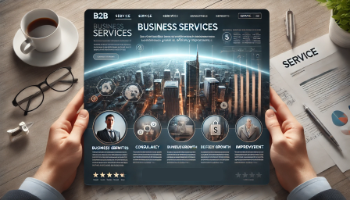 B2B Companies: For B2B companies, the services pages are first meant to educate the visitor on the company's capabilities. The second purpose, and probably most important to the overall digital marketing goals of a B2B company, is to build trust with the website visitor.
Building trust makes visitors feel comfortable with the company, reducing their fears associated with the risk of working with a new company.
From a conversion perspective, one way to increase the number of conversions from your services page is to first provide proof elements on it. For example, provide a link to a case study for every service you have listed. This will allow your website visitor to quickly and easily associate a service you offer with proof of the impact that service had on another company.
Secondly, don’t overlook the importance of the Call To Action for your service page. Identify the next logical step for a visitor to your services page and then use strong CTA’s throughout that page to take the visitor to the next logical step.
 B2C Companies: The ultimate best practice for B2C product pages is to focus on the product's benefits and value, use persuasive and engaging visuals, and create a seamless purchasing experience that reduces friction. B2C shoppers make quicker buying decisions, so creating a page that compels them with emotional and practical incentives is essential.
Use social engagement from actual customers to make a very big impact on consumers who are shopping for your products. Bring in your review rankings, show positive comments about each product on its detail pages, and ask your customers to share videos and/or photos of them using your products.
Also, have a trusted advisor purchase something or go through your customer’s decision-making process on your website to see what a “real” experience is like. Then, take that learned information and look for friction points that frustrate your website visitors. Reducing friction is one of the best changes you can make to a website to increase conversions.
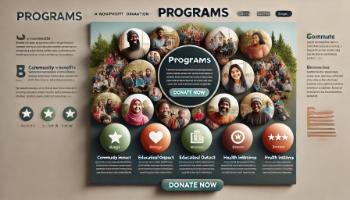 Nonprofit Organizations: For a nonprofit’s program page, the goal should be to appeal to your audience's emotions while demonstrating the tangible impact their support can make. The key to converting visitors into donors or volunteers is building an emotional connection with the cause while showing that their contribution will create real, measurable change.
One of the most important areas to focus on to accomplish this is your content. By using storytelling effectively, you can quickly connect your organization's value to why a visitor’s support would be satisfying for the individual considering supporting your organization.
Use storytelling to connect emotionally with the audience. Introduce real stories of individuals or communities impacted by your programming or mission, including before-and-after scenarios.
Like all other CRO suggestions we’ve covered, nonprofit organizations need clear and actionable calls to action. These CTOs should support the storytelling and take your website’s visitors to the next logical step in their decision process. Remember that this will most likely not be a donation conversion but a link to a page that talks about your organization's successes.
About Us Pages
Believe it or not, the About Us page can be one of the most instrumental in building trust and connection. A conversion goal here might be to guide the visitor toward exploring case studies, connecting on social media, or understanding the company’s values.
Again, we recognize that the conversions for the About Us page will vary based on the type of business or organization you are. Here are some top-level ideas on how you can optimize your About Us page:
B2B Companies: The goal of an About Us page for B2B companies should be to be part of the conversion process for a visitor to turn into a lead. Your About Us page should introduce a visitor to your company, explain your value proposition, and, most importantly, sell the visitor on your company.
This is also where you can use CTAs to pull visitors deeper into your website and begin telling the story about your company and how it works with other companies. Some CTAs that should be used on the About Us page include links to your case studies, links to any gated content or leadership papers that you’ve written, and, not to be forgotten, an invitation to sign up for your newsletter.
B2C Companies: Report after report shows that consumers now want to connect with the brands they buy from more than ever. Use your About Us page to begin that connection with them. So, how do you do that?
Start with telling your compelling brand story. Let the visitors to your site know how your company got started and why you do what you do. Why you are in business, and what your business philosophy is. Be open about the struggles that you’ve overcome on the path to being the company that you are. There’s nothing that begins relationships more than an open and honest dialogue about your brand story.
Don’t forget to include your social media profiles within your About Us page. Getting your visitors to follow your social profiles is a great next step; from an About Us page, be sure to provide lots of links to your social media profiles.
Nonprofit Organizations: The objective of an About Us page for most nonprofit organizations is to build an emotional connection with visitors by conveying the organization's mission, values, and impact. The page also establishes credibility and encourages visitors to take meaningful actions such as donating, volunteering, or supporting the cause.
To accomplish this objective effectively, nonprofits, like the above for-profit companies, should focus on compelling storytelling to engage their audience. Sharing real-life stories about the people or communities they serve allows visitors to connect emotionally with the organization's mission. Use vivid, personal narratives highlighting the challenges beneficiaries face and how the nonprofit's work has made a meaningful impact. Including before-and-after scenarios or testimonials from those directly impacted helps make the cause more tangible and relatable, inspiring visitors to contribute to the organization's mission.
Another key approach is to demonstrate transparency and measurable impact. Potential donors and supporters are more likely to engage when they feel confident that their contributions will be used effectively. Nonprofits should include clear data points and visual elements—such as infographics or metrics—to show the impact of their programs. Information like how donations are allocated, specific accomplishments, and goals for the future helps build trust and assures visitors that their support makes a real difference. By showcasing the stories and measurable results of their work, nonprofits can effectively engage their audience and convert interest into meaningful support.
Benefits of Page-Level Conversion Optimization
Defining conversion goals at the page level offers a strategic advantage that can significantly enhance the overall performance of a website. Treating each page as an individual unit with its specific purpose ensures that every visitor is guided along the journey that best aligns with their needs and the business’s objectives.
This approach maximizes the potential of every interaction rather than relying on broad, one-size-fits-all goals that often fail to engage users effectively. Page-specific conversion goals ensure that each page is optimized to serve its unique function—generating leads, building trust, or educating visitors.
One of the primary benefits of page-level conversion goals is the ability to provide a more personalized user experience. Each page can be tailored to reflect where a visitor is in their journey, addressing their specific questions or concerns at that moment. For instance, a blog post might focus on converting casual readers into subscribers, while a service page aims to generate consultation requests. By aligning the content, calls-to-action, and design of each page with these goals, visitors are more likely to find precisely what they need and feel compelled to take the next step.
Another major benefit is the ability to gather deeper insights into how different pages contribute to the overall success of a website. By tracking specific conversion goals for each page, you gain a clearer understanding of what is working and what needs improvement. This data-driven approach allows for more targeted optimization, ensuring that the elements that perform well are leveraged effectively across the site while underperforming elements are improved. It also helps in understanding visitor intent and behavior more precisely, which can inform both content strategy and future development.
Ultimately, defining conversion goals at the page level enhances the efficiency of your website by ensuring that no page is wasted. Every page serves a clear purpose, and each interaction is a meaningful step toward achieving broader business outcomes. This not only leads to better overall conversion rates but also ensures a cohesive and satisfying user experience that moves visitors smoothly through the conversion funnel. By recognizing and harnessing the unique potential of every page, you set the foundation for higher engagement, improved lead quality, and increased conversion opportunities.
How To Get Started with CRO
To get started with page-specific conversion rate optimization, our service offers in-depth insights using advanced behavior analytics tools. These tools provide heatmaps to visualize user engagement, session recordings to see exactly how visitors navigate each page, and feedback options to capture user thoughts in real-time. By leveraging these features, we gain a comprehensive understanding of how visitors interact with specific pages on your website and identify points of friction that may hinder conversions.
With our expertise, we'll use this data to make targeted improvements, optimizing each page to achieve its unique conversion goal. Our approach ensures that your website provides an intuitive and engaging experience tailored to each visitor, driving higher engagement and conversion rates.
Ready to maximize your page-level conversions? Contact us today to get started with your tailored CRO project and see how our insights can transform your website’s performance.